Study in Malta
Study in Malta for International Students: The Complete 2026 Guide
June 2026 · 18 min read

By Outreach Recruitment Agency · Published 12 June 2026 · 18 min read
Studying in Malta as an international student means accessing EU-recognised degrees taught entirely in English, at institutions charging a fraction of UK or US tuition fees. Non-EU students apply for a Type D long-stay visa, register a Student Residence Permit within 30 days of arrival, and can legally work up to 20 hours per week.
Ready to Study in Malta?
Apply Now →Malta stands out as a study destination for international students because it combines English-language education, EU-recognised qualifications, and Mediterranean living at a cost far below comparable European countries. More than 11,000 international students were enrolled in Maltese institutions in 2024, a figure that has grown by over 40% in five years.
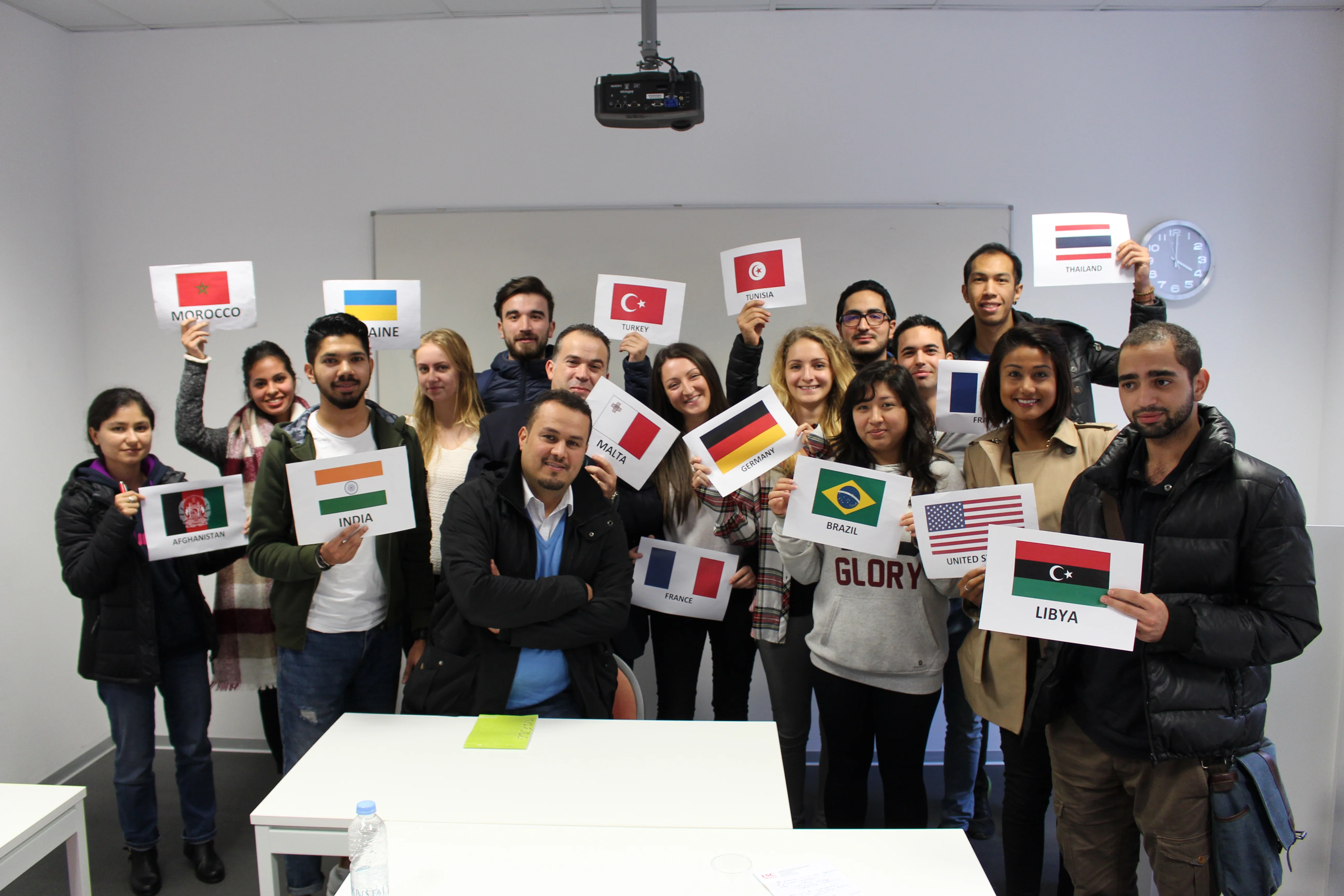
Here are the six reasons students from India, Morocco, Nigeria, Libya, and across the world consistently choose Malta:
Malta is one of only two EU member states with English as an official language — the other is Ireland. Every university programme, diploma, and professional course is taught entirely in English. Students arrive without a language barrier and graduate with a credential that communicates globally.
All accredited programmes in Malta are certified under the Malta Qualifications Framework (MQF), which aligns directly with the European Qualifications Framework (EQF). A Maltese degree is recognised across all 27 EU member states for employment, further study, and professional licensing — at tuition fees that start from €5,000 per year, compared to €12,000–€28,000 in the UK or Ireland.
Malta consistently ranks among Europe's top 5 safest countries. Its total area of 316 km² means students are never more than 45 minutes from any point on the island by bus. The public transport system covers the entire island and is free for students enrolled at accredited institutions — a Tallinja card is issued on registration.
Average temperatures range from 15°C in winter to 32°C in summer. Students combine academic life with year-round outdoor living — beaches, historical sites (Malta has more UNESCO heritage sites per km² than anywhere in Europe), and a vibrant social scene in Valletta, Sliema, and St Julian's.
International students in Malta with a valid student visa can legally work up to 20 hours per week during term time and full-time during official academic holidays. This allows students to offset living costs and gain EU work experience while completing their degree.
Malta is a full Schengen member. A Maltese student residence permit grants free movement across 26 Schengen countries — giving students access to work placements, internships, and travel throughout Europe during their studies.
★★★★★"Outreach Recruitment made everything clear from the start. I got my visa approved, found accommodation before I arrived, and started my MBA at GBS Malta exactly as planned. I could not have done it without their support."
★★★★★"I was worried about the visa process from India, but the team at Outreach Recruitment handled every document. I am now in my second year of my Bachelor's in IT at GBS Malta and already working part-time."
International students in Malta can choose from four main types of programmes. All are taught in English and lead to MQF-certified qualifications recognised across the European Union.
| Programme Type | Qualification | Duration | Tuition (per year) |
|---|---|---|---|
| English Language Course | Certificate | 1 week – 12 months | €140–€295/week |
| Diploma / Award | MQF 5 | 1–2 years | €5,000–€7,500 |
| Bachelor's Degree | MQF 6 | 3 years | €6,000–€7,500 |
| Master's / MBA | MQF 7 | 1–2 years | €6,950–€10,000 |
Subject areas available include: Accountancy & Finance, Business Administration, Health & Social Care, Information Technology, Tourism & Hospitality, Logistics & Supply Chain, Digital Marketing, and English Language Teaching.
Browse all available study programmes in Malta →
Explore Study Programmes in Malta
Browse bachelor's, master's, and English language programmes available to international students — filter by subject area, qualification, and school.
Browse All Programmes →The application process for international students studying in Malta takes between 4 and 12 weeks depending on your country of origin and programme. Here is the complete step-by-step process.
Start by identifying the type of programme that matches your goals — an English language course, a diploma, a bachelor's degree, or a master's programme. Use the complete guide to studying in Malta to compare schools, qualifications, and costs.
Confirm that your academic background meets the entry requirements for your chosen programme. Most diploma programmes require secondary school completion. Bachelor's programmes typically require a diploma or equivalent. Master's programmes require a bachelor's degree. A minimum English level of B1–B2 is required for most programmes.
Apply through Outreach Recruitment Agency Malta. Submit your documents — passport copy, academic transcripts, and English proficiency evidence. Outreach Recruitment verifies your eligibility, submits your application to the school, and sends you a formal offer letter when accepted.
With your offer letter, apply for a Type D (National) Long-Stay Visa at the nearest Maltese embassy or consulate in your home country. Required documents include: valid passport (minimum 18 months validity), offer letter from a Maltese institution, proof of financial means (minimum €9,000 in savings), travel health insurance, and accommodation proof. Visa processing takes 4–8 weeks.
Book your accommodation before you arrive in Malta. Options include shared apartments (€300–€550/month), student residences, and homestays. Outreach Recruitment provides accommodation referrals as part of the enrolment process. Popular student areas include Msida, Gzira, and St Julian's.
Within 30 days of arrival in Malta, non-EU students must visit Identity Malta and apply for a Student Residence Permit. This permit is valid for the duration of your course and allows you to remain and study legally in Malta.
Ready to Start Your Application?
Start Your Application →Non-EU international students need a Type D (National) Long-Stay Visa to study in Malta for more than 90 days. EU, EEA, and Swiss nationals do not need a visa and can enrol directly.
Outreach Recruitment Agency Malta prepares your complete visa documentation package as part of its free enrolment service. Read the full Malta student visa guide →
Free Study in Malta Webinar
Join our free webinar and get expert answers about studying in Malta — visa requirements, programme options, and costs explained live by our team.
Register for the Free Webinar →Tuition fees in Malta depend on the programme level and institution. Costs are significantly lower than equivalent programmes in the UK, Ireland, or the Netherlands, making Malta one of the most cost-effective English-language study destinations in Europe.
| Programme | Malta (per year) | UK (per year) | Saving |
|---|---|---|---|
| Diploma MQF 5 | €5,000 | €9,000–€12,000 | Save up to €7,000 |
| Bachelor MQF 6 | €6,000–€7,500 | €12,000–€20,000 | Save up to €12,500 |
| Master / MBA MQF 7 | €6,950–€10,000 | €14,000–€28,000 | Save up to €18,000 |
Several schools offer scholarships of 20–25% for students who pay tuition fees upfront or in advance. Outreach Recruitment informs all students about available scholarship discounts at the time of application.
Malta is one of the most affordable countries in the EU for international students. Monthly living costs typically range from €700 to €1,100, depending on lifestyle and accommodation choices.
Students who work part-time (20 hours/week at minimum wage) can earn approximately €700–€900/month, covering a significant portion of their living costs. Read our full guide to cost of living in Malta as a student.
Yes. International students studying in Malta with a valid student visa and residence permit are legally entitled to work up to 20 hours per week during term time and full-time during official academic holidays. EU students have unrestricted work rights from the moment they enrol.
Popular student jobs in Malta include: hospitality (waiter, barista, hotel reception), customer service, retail, administration, and IT support. Malta's strong iGaming and finance sectors also offer intern and junior roles for students in related programmes.
Read our full guide on working while studying in Malta for details on minimum wage, tax registration, and the best student job sectors.
Malta Study Guide — Everything You Need to Know
Access our complete Malta Study Guide: visa steps, universities, costs, scholarships, accommodation, and more — all in one place.
Read the Full Malta Study Guide →Finding accommodation in Malta before arrival is strongly recommended. The most popular areas for international students are Msida (close to the University of Malta), Gzira, Sliema, St Julian's, and Birkirkara. Outreach Recruitment provides accommodation referrals to all enrolled students at no extra cost.
Types of accommodation available to international students in Malta:
Read the full guide to student accommodation in Malta for area-by-area advice and tips.
Yes. Malta is a full EU member state and all accredited degree programmes are certified under the Malta Qualifications Framework (MQF), which maps directly to the European Qualifications Framework (EQF). This means Maltese degrees are legally recognised across all 27 EU member states for employment, further study, and professional licensing.
For students from outside the EU, Maltese degrees are widely accepted globally because of Malta's EU membership and the Bologna Process alignment. Many employers in India, Nigeria, and the Gulf recognise Maltese degrees precisely because they are EU-certified and taught in English.
Key accrediting bodies in Malta:
The experience of studying in Malta differs significantly depending on whether you hold an EU/EEA passport or a non-EU passport. Here is a direct comparison.
| Factor | EU / EEA Students | Non-EU Students |
|---|---|---|
| Visa | Not required | Type D long-stay visa required |
| Residence Permit | Optional for stays >3 months | Mandatory within 30 days of arrival |
| Work Rights | Unlimited | 20 hrs/week during term |
| Schengen Travel | Full freedom of movement | Via student residence permit |
| Application Timeline | 2–4 weeks | 8–14 weeks (inc. visa) |
Several Maltese institutions offer scholarship discounts to international students — particularly for early payment of tuition fees. While Malta does not have a centralised national scholarship fund for international students, individual schools and the Maltese government offer the following:
Outreach Recruitment Agency Malta informs every student of available scholarship discounts at the time of application — at no extra cost.
Apply to Study in Malta
Apply to Study in Malta →★★★★★"I did not expect the process to be this smooth. From Morocco to Malta in under 10 weeks. The team at Outreach Recruitment answered every question I had about the student visa and residence permit. Highly recommend."
Yes. Malta welcomes international students from all countries. EU/EEA students can enrol freely with no visa. Non-EU students need a Type D long-stay visa and a Student Residence Permit from Identity Malta.
Tuition fees range from €5,000/year (diploma MQF 5) to €7,500/year (bachelor MQF 6) and €6,950–€10,000/year (master MQF 7). English language courses cost €140–€295/week. Living costs average €700–€1,100/month.
EU, EEA, and Swiss nationals do not need a visa to study in Malta. Non-EU nationals need a Type D long-stay visa, obtainable from the nearest Maltese embassy or consulate, and must apply for a Student Residence Permit within 30 days of arrival.
Yes. All accredited Maltese degrees carry MQF certification, which is equivalent to the European Qualifications Framework (EQF). Degrees are recognised across all 27 EU member states for work, further study, and professional licensing.
Yes. Non-EU students with a valid student visa can work up to 20 hours per week during term time and full-time during official academic holidays. EU students have unrestricted work rights. Malta's minimum wage in 2026 is approximately €5.28/hour.
The Malta student visa (Type D) typically takes 4–8 weeks to process from the date of submission. Outreach Recruitment Agency Malta prepares your full documentation package to avoid delays and rejections.
Yes. All university programmes, diplomas, and English language courses in Malta are taught entirely in English. Malta is one of only two EU member states with English as an official national language.
للطلاب الناطقين بالعربية
تُعدّ مالطا وجهة دراسية مثاليـة للطلاب الدوليين القادمين من الدول العربية. تُدرَّس جميع البرامج الجامعية باللغة الإنجليزية، والدرجات العلمية معتمدة من الاتحاد الأوروبي. تشمل الخدمة توجيهاً مجانياً في اختيار البرنامج، ودعم في إجراءات التأشيرة والإقامة. للتواصل مع فريق Outreach Recruitment في مالطا، تفضّل بزيارة موقعنا أو التواصل عبر البريد الإلكتروني: hr@outreachrecruitment.net
Pour les étudiants francophones
Malte est une destination d'études idéale pour les étudiants francophones souhaitant obtenir un diplôme européen reconnu, enseigné entièrement en anglais. Les frais de scolarité débutent à 5 000 € par an, bien inférieurs à ceux du Royaume-Uni ou de l'Irlande. Outreach Recruitment Agency Malta vous accompagne gratuitement depuis le choix du programme jusqu'à votre premier jour de cours. Contactez-nous à hr@outreachrecruitment.net.
Watch: How to Study in Malta — International Student Guide
Video coming soon. Join our free webinar for live guidance on studying in Malta as an international student.
Free Study in Malta Webinar
Join our live webinar — get answers about visas, programmes, costs and life in Malta from our expert team. Free for all prospective students.
Register for the Free Webinar →Free Download
Everything you need before you apply — visa documents, programme checklist, packing list, and arrival guide.
No spam. Unsubscribe at any time. Privacy Policy
View All Study Programmes in Malta
Compare all available courses, schools, qualifications and fees — filter by subject or level.
View All Study Programmes →Studying in Malta as an international student offers a rare combination: English-language instruction, EU-recognised qualifications, the right to work while studying, and a Mediterranean lifestyle — at a cost significantly lower than comparable destinations in northern Europe.
Whether you are coming from India, Nigeria, Morocco, Libya, or anywhere else in the world, the path to studying in Malta is straightforward when you have the right support. Outreach Recruitment Agency Malta handles every step — from programme selection to visa documentation to accommodation.
Explore all study programmes in Malta or read our complete Malta Study Guide to continue your research.
Start Your Journey — Apply to Study in Malta
Apply Now →Cite this article
APA:
Outreach Recruitment Agency. (2026). Study in Malta for International Students: The Complete 2026 Guide. Outreach Recruitment. Retrieved from https://outreachrecruitment.net/study-in-malta-for-international-students
MLA:
Outreach Recruitment Agency. "Study in Malta for International Students: The Complete 2026 Guide." Outreach Recruitment, 12 June 2026, outreachrecruitment.net/study-in-malta-for-international-students.
Chicago:
Outreach Recruitment Agency. "Study in Malta for International Students." Outreach Recruitment. June 12, 2026. https://outreachrecruitment.net/study-in-malta-for-international-students.