.png)
Work & Careers

Quick Answer
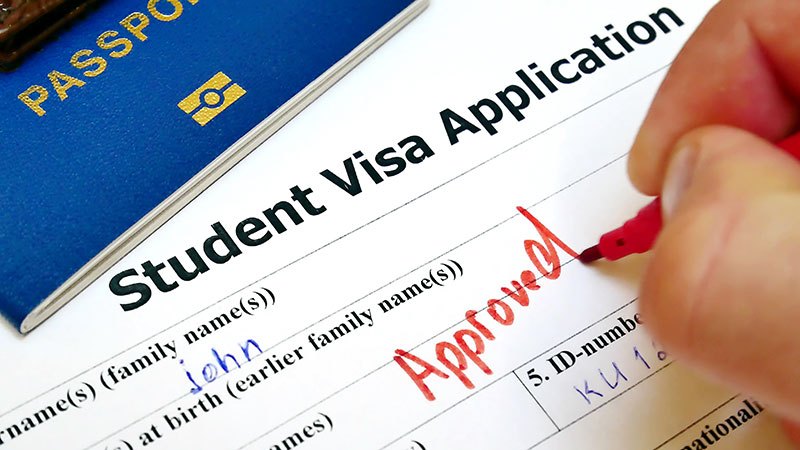
Non-EU students need a Malta student visa and a Student Residence Permit to study for more than 90 days. Apply for the entry visa at your nearest Maltese embassy, then apply for the residence permit at Identità within 3 months of arriving in Malta. Total costs start at approximately €80 for the visa and €27.50 for the permit.
Malta has become one of the most sought-after study destinations in the Mediterranean. As a full member of the European Union and the Schengen Area, Malta offers internationally recognised degrees, English-taught programs, a warm climate, and one of the most accessible student visa processes in Europe.
But if you are approaching Malta's immigration system for the first time, the process can feel confusing. Which visa do you need — a Schengen visa or a national long-stay visa? What documents must you prepare? How long does everything take, and how much does it cost?
This guide answers every question. Whether you are planning to enrol at the University of Malta, join an English language course, or start a bachelor's or master's at one of Malta's private colleges, you will find everything you need here. For a full overview of living and studying in Malta, read our complete Study in Malta guide first.
Ready to Start Your Malta Study Journey?
Apply Now →Free application support from our Malta-based expert team
A Malta student visa is an official authorisation issued by the Maltese government that permits non-EU nationals to enter Malta for academic study, vocational training, or accredited language courses at an approved institution.
Malta belongs to both the European Union and the Schengen Area, meaning its visa framework follows EU law and the Schengen Agreement. A Malta student visa can give you access to all 27 Schengen countries for short stays during your studies — a significant added benefit.
The process has two distinct phases:
A degree obtained in Malta carries full EU recognition — valid throughout Europe and widely accepted globally. This makes Malta particularly popular with students from India, Nigeria, Libya, Egypt, Tunisia, and other non-EU countries seeking a recognised European qualification.
| Nationality | Stay Under 90 Days | Stay Over 90 Days |
|---|---|---|
| EU / EEA / Swiss nationals | No visa required | No visa — register at local council |
| Non-EU (visa-exempt countries) | No visa to enter | Apply for Residence Permit after arrival |
| Non-EU (visa-required countries) | Schengen Type C visa | National Type D visa + Residence Permit |
EU/EEA and Swiss nationals have the right to study in any EU country without a visa. They simply need to register at the local council if staying longer than 3 months.
Non-EU nationals from visa-exempt countries (such as the USA, Canada, Australia) can enter Malta without a visa for short stays, but must apply for a Student Residence Permit at Identità if their program exceeds 90 days.
Non-EU nationals from visa-required countries — including most African, Middle Eastern, and South Asian nationalities — must apply for a visa at a Maltese embassy before travelling to Malta.
| Visa Type | Duration | Best For | Applied Where |
|---|---|---|---|
| Schengen Type C | Up to 90 days | Short English courses, intensive programs | Maltese embassy (home country) |
| National Type D | Over 90 days | Degrees, full-year programs | Maltese embassy (home country) |
| Student Residence Permit | 1 year (renewable) | All students staying over 90 days | Identità office, Malta |
Allows entry and stay in Malta — and other Schengen countries — for up to 90 days within a 180-day period. Suitable for short English language courses and summer programs. Cannot be extended — if your course is longer than 90 days, apply for a Type D visa from the start.
Required if your program exceeds 90 days — this covers all bachelor's degrees, master's programs, and most full-year language courses. Applied for at the Maltese consulate in your home country before you travel.
The core document that legally authorises you to live and study in Malta for your program's duration. Applied for at Identità after arrival, issued for one year, and renewed annually while you remain enrolled.
Important: All documents not in English or Maltese must be certified by an official translator. Criminal records and birth certificates typically require apostille legalisation — allow 2–4 weeks for this process.
| Document | Type C | Type D | Residence Permit |
|---|---|---|---|
| Valid passport | ✓ | ✓ | ✓ |
| Acceptance letter | ✓ | ✓ | ✓ |
| Proof of funds | ✓ | ✓ | ✓ |
| Health insurance | ✓ | ✓ | ✓ |
| Proof of accommodation | ✓ | ✓ | ✓ |
| Criminal record | — | ✓ | ✓ |
| Medical certificate | — | ✓ | ✓ |
| Transcripts / diplomas | — | Optional | ✓ |
Malta Study Guide — Everything in One Place
Our complete Malta Study Guide covers universities, tuition fees, scholarships, accommodation, work rights, and post-study careers — everything you need before you apply.
Read the Full Malta Study Guide →The process runs in two phases: your home country phase (visa application) and your Malta phase (residence permit). Here is the complete step-by-step breakdown.
Step 1: Choose an MFHEA-approved institution and receive your acceptance letter. Your acceptance letter is the cornerstone of your entire visa application. Only enrolment at an institution licensed by the Malta Further and Higher Education Authority (MFHEA) or the Malta Tourism Authority (for language schools) qualifies.
Step 2: Gather all required documents. Start your document collection immediately after receiving your acceptance letter. Criminal record certificates, apostilles, and certified translations typically take 2–6 weeks. Ensure your passport is valid for at least 3 months beyond your return date.
Step 3: Book your embassy appointment. Find the nearest Maltese embassy or consulate. If Malta has no mission in your country, look for an embassy representing Malta for Schengen purposes — often Italy, France, or Germany. Book early — popular consulates fill up 3–6 weeks ahead.
Step 4: Submit your application and pay the fee. Attend your appointment with all originals and copies. Pay the fee (approximately €80 for Schengen, €100–€150 for Type D). Provide biometrics if required and keep all receipts.
Step 5: Wait for the decision. Processing typically takes 15 calendar days for a Type C visa and 4–8 weeks for a Type D. Do not book non-refundable flights until your visa is confirmed.
Step 6: Collect your visa and travel to Malta. Check all details carefully — name, validity dates, and number of entries must be correct. Bring all original documents with you.
Step 7: Apply for your Student Residence Permit at Identità. Within 3 months of arrival, book and attend an appointment at Identità. Bring all original documents plus the application form. Processing takes 4–8 weeks.
Step 8: Collect your permit card. Once notified, collect your biometric residence permit card. Carry it with you at all times — it is required for banking, employment, and re-entry into Malta.
Step 9: Renew annually. Begin renewal at least 6 weeks before expiry. You will need a fresh enrolment certificate and updated proof of funds each year.
Need Help With Your Malta Student Visa Application?
Start Your Application →Our experts guide you through every document, step, and appointment
| Fee Item | Approx. Cost | Notes |
|---|---|---|
| Schengen Type C visa | €80 | Reduced rates apply for some nationalities |
| National Type D visa | €100–€150 | Varies by nationality and consulate |
| Residence permit application | €27.50 | Paid at Identità in Malta |
| Residence permit card | €5–€20 | One-off card production fee |
| Health insurance (annual) | €50–€250 | Varies by provider and coverage level |
| Criminal record + apostille | €30–€100 | Depends on home country |
| Certified translations | €20–€60 per page | Required for non-English documents |
| Medical certificate | €20–€50 | From an authorised physician |
Total first-year estimate: approximately €300–€600, depending on your nationality and home country consulate fees. Renewal costs in subsequent years are significantly lower.
Note: Visa fees are non-refundable even if your application is refused. Ensure all documents are complete and correct before submitting.
| Stage | Processing Time | Where |
|---|---|---|
| Schengen Type C visa | 15 calendar days (up to 45) | Maltese embassy / consulate |
| National Type D visa | 4–8 weeks | Maltese embassy / consulate |
| Student Residence Permit | 4–8 weeks after submission | Identità, Malta |
| Annual permit renewal | 2–4 weeks | Identità, Malta |
Do not leave it late: Apply for your visa at least 3 months before your course start date. Consulate appointment slots run scarce and processing can take longer than expected during peak summer periods.
Free Study in Malta Webinar — Get Expert Answers Live
Not sure where to start? Join our free webinar where Malta-based education experts answer your questions about student visas, programs, costs, and accommodation in real time.
Register for the Free Webinar →The Student Residence Permit is the most important document you will hold as an international student in Malta. It is not a visa — it is a separate authorisation confirming your legal right to reside in Malta as a student.
Where to apply: Identità — Malta's national identity and residence authority. Their main office is in Valletta, with additional service points across the island. Appointments are booked online through the Identità portal.
The permit is issued for one academic year and must be renewed before expiry. Begin the renewal process at least 6 weeks before your permit expires. You need a fresh enrolment certificate from your institution, updated bank statements, and current accommodation proof.
Refusals are rare when documents are complete and your institution is approved. Common causes include insufficient funds, invalid insurance, or an unrecognised institution. You have the right to appeal — contact Identità directly for the procedure.
Malta offers a wide range of programs for international students — from 2-week English courses to 4-year bachelor's degrees and specialist master's programs.
| Program Type | Duration | Typical Visa |
|---|---|---|
| English Language Course | 2 weeks – 12 months | Type C or Type D |
| Foundation / Pre-University | 6–12 months | Type D + Permit |
| Bachelor's Degree | 3–4 years | Type D + Permit |
| Master's Degree | 1–2 years | Type D + Permit |
| MCAST Vocational Programs | 1–3 years | Type D + Permit |
| iGaming / Tech Professional | 3–12 months | Type D + Permit |
Explore All Study Programs in Malta
Browse bachelor's degrees, master's programs, English language courses, and professional certifications — all available to international students right now.
Browse All Programs →International students in Malta can legally work — with conditions attached to their residence permit.
| Job Type | Hourly Rate | Monthly (20 hrs/wk) |
|---|---|---|
| Hospitality / Retail | €5.00–€7.00 | €400–€560 |
| Customer Service | €7.00–€10.00 | €560–€800 |
| iGaming Support | €10.00–€14.00 | €800–€1,120 |
| Admin / Data Entry | €6.00–€9.00 | €480–€720 |
Finishing your studies in Malta does not mean you have to leave. Malta offers clear pathways for graduates who want to remain and build a career.
Post-study work permit: International graduates from Maltese institutions can apply for a post-study work permit, typically granting an initial 12-month stay to seek employment in their field. This is processed through Jobsplus.
After working legally in Malta for several years, graduates may also qualify for long-term EU residence status.
| Mistake | Consequence | How to Avoid |
|---|---|---|
| Applying too late | Missing your course start | Apply 3–4 months before intake |
| Insufficient funds shown | Visa refused | Maintain funds for 6+ months in account |
| Expired health insurance | Application rejected | Cover must span full intended stay |
| Unapproved institution | Visa not granted | Verify MFHEA approval before applying |
| Missing apostille | Application rejected | Request apostille from home country authority |
| Late residence permit application | Illegal stay | Book Identità appointment before landing |
EU, EEA, and Swiss nationals do not need a visa. Non-EU nationals need a Schengen Type C visa for programs under 90 days, or a National Type D visa and Student Residence Permit for programs over 90 days.
A Schengen visa costs approximately €80. A Type D long-stay visa costs €100–€150. The Student Residence Permit at Identità costs approximately €27.50, plus the permit card. Total first-year costs: €300–€600 including insurance and documentation.
A Schengen Type C visa: 15 calendar days (up to 45). A Type D visa: 4–8 weeks. The Student Residence Permit from Identità: a further 4–8 weeks after submission in Malta.
Yes. Non-EU students with a valid Student Residence Permit can work up to 20 hours per week during term time, and full-time during official holiday periods.
There is no official fixed minimum, but authorities typically expect evidence of €500–€800 per month of stay — roughly €6,000–€9,600 for a full academic year. Funds can be personal savings or a sponsor's financial guarantee.
You cannot extend a Schengen Type C visa inside Malta. For longer stays you must have applied for a Type D visa from the outset. The Student Residence Permit is renewed annually while you remain enrolled.
Most programs at Maltese institutions are taught in English. Some courses require proof of English proficiency (IELTS 5.5–6.5 or equivalent). Malta is also a top destination for English language courses, making it ideal if you want to improve before starting a degree.
Yes. Graduates can apply for a post-study work permit, allowing them to remain in Malta and seek employment. Malta's iGaming, technology, and financial services sectors offer strong graduate opportunities.
Apply to Study in Malta — Expert Support from Day One
Apply to Study in Malta →Our Malta-based team handles visa guidance, program selection, and accommodation support
The Malta student visa process is one of the most accessible in the European Union — but it requires careful planning and complete documentation from the start. Understanding the difference between a Type C Schengen visa, a Type D long-stay visa, and a Student Residence Permit is the foundation of a smooth and successful application.
Malta offers something genuinely rare: an English-speaking, EU-member Mediterranean island with internationally recognised degrees, a booming job market, and a welcoming environment for international students. The visa cost and process is a small investment compared to the opportunities waiting on the other side.
Your next steps:
Find Your Study Program in Malta
Browse bachelor's degrees, master's programs, English courses, and professional certifications open to international students.
Browse All Programs →Still Have Questions? Join Our Free Webinar
Get live expert answers about Malta student visas, study programs, costs, and life in Malta. Our webinars are free and held regularly for students worldwide.
Register Free →Read Our Complete Malta Study Guide
From visa to graduation — universities, tuition fees, scholarships, accommodation, work rights, and post-study pathways all in one place.
Read the Full Malta Study Guide →Explore more study resources
Visit our Study in Malta overview page for programs, visa support, and expert guidance. Or browse all study guides for more detailed articles on costs, accommodation, scholarships, and working in Malta.