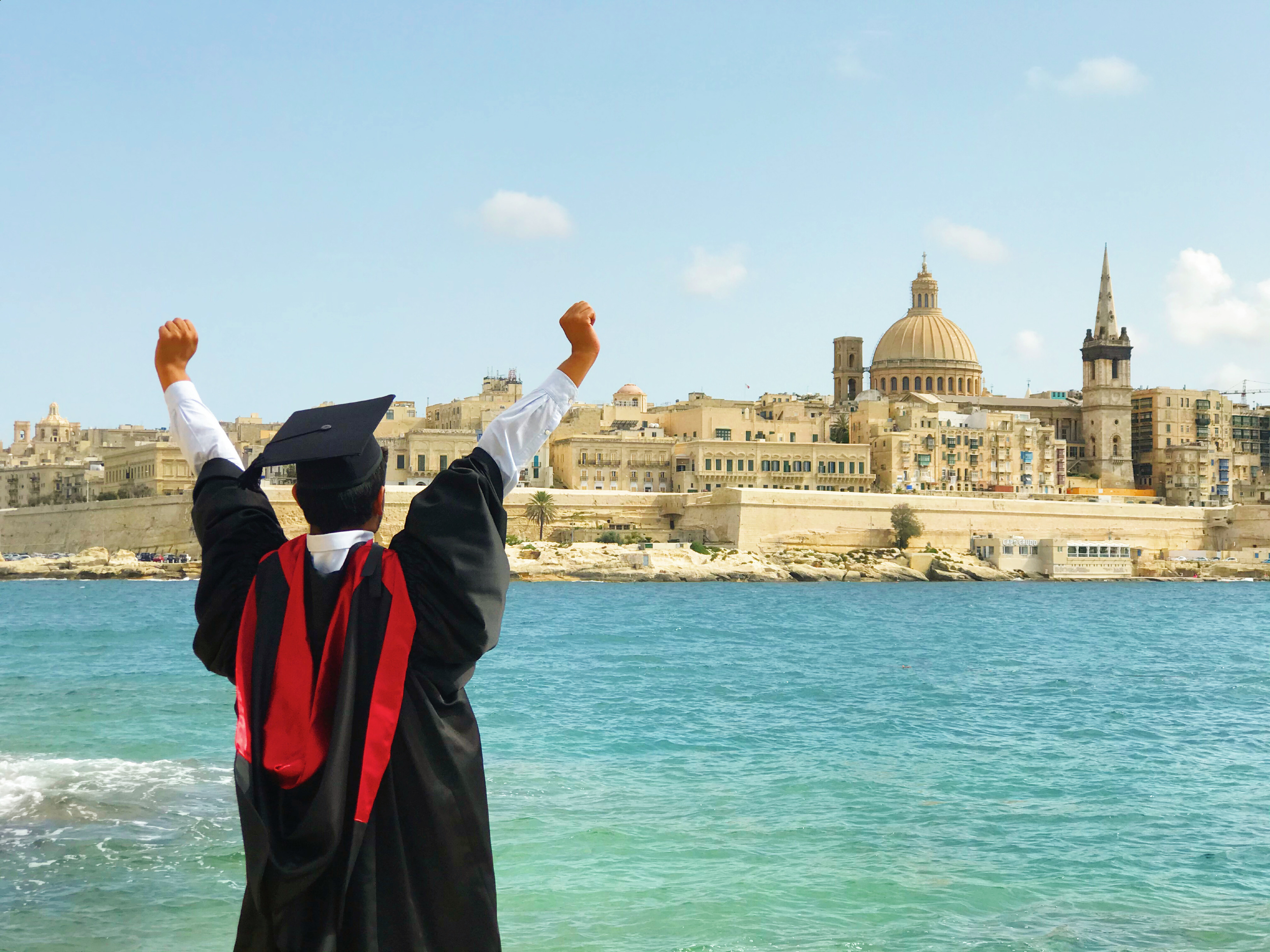
/>

← Back to Malta Study Guide

Recruitment & International Education Specialists, Malta

Outreach Recruitment has personally guided hundreds of international students through the Malta admissions, visa, and residence permit process. Our Malta-based team works daily with Maltese institutions and government bodies to help students from Africa, Asia, the Middle East, and beyond build their futures in Malta.

LinkedIn · About Outreach Recruitment

By Outreach Recruitment Agency · Published 11 June 2026 · 22 min read

Studying in Malta gives international students access to EU-recognised degrees taught in English at some of the Mediterranean’s most affordable institutions. Students can enrol in bachelor’s, master’s, or language programmes and apply for a student residence permit valid for the duration of their course.

Ready to Study in Malta?

Apply Now →
Why Malta in 2026?

Malta is a full EU member state where all accredited programmes are taught in English — one of only two EU countries with English as an official language. It combines EU-recognised degrees, affordable tuition, Mediterranean quality of life, and a growing job market in iGaming, fintech, and ICT.

University professor lecturing students in Malta — Study in Malta guide 2026 | Outreach Recruitment
University lecture in progress — the kind of classroom environment awaiting students in Malta. Photo: Vitaly Gariev / Unsplash.

For the full programme listing, visit our Study in Malta page — updated for the 2026 intake.

  • EU membership since 2004 — degrees recognised across all 27 member states
  • English official language — genuine immersion, no language barrier
  • Bologna Process aligned — MQF levels 1–8 map to the EQF
  • Regulator: MFHEA — verify licensing at mfhea.mt before enrolling
  • 300+ sunny days/year — one of Europe’s sunniest countries
  • Safe — consistently top 5 in EU safety rankings
What Students Say About Studying in Malta
★★★★★

"I applied through Outreach Recruitment and had my student visa approved in six weeks. The process was clear, the team answered every question, and I started my Business degree at the University of Malta on schedule. Malta exceeded all my expectations."

, Nigeria — University of Malta, Business & Management, 2025
★★★★★

"Studying in Malta was the best decision I made. The degree is EU-recognised, the cost of living is affordable, and English is everywhere. I had a part-time job within three weeks of arriving which covered most of my living expenses."

, India — MCAST, Information Technology, 2025
1. Malta’s higher education system explained

Malta’s higher education is built on the British academic model and fully aligned with the Bologna Process. The Maltese Qualifications Framework (MQF) governs qualifications from level 1 to 8 and maps directly to the European Qualifications Framework (EQF). Every degree from a licensed Maltese institution carries verifiable EU recognition.

The regulatory body is the Malta Further and Higher Education Authority (MFHEA). A valid MFHEA licence is mandatory for your student residence permit — verify at mfhea.mt.

  • Certificate / Diploma — MQF 1–5, 1–2 years
  • Bachelor’s Degree — MQF 6, 3–4 years
  • Master’s Degree — MQF 7, 1–2 years
  • Doctoral Degree (PhD) — MQF 8, 3–4 years
  • English Language Courses — 2 weeks to 12 months, all CEFR levels
2. Top universities and colleges in Malta

Malta has one public university founded in 1592, one vocational college (MCAST), and a range of MFHEA-licensed private institutions — all teaching in English.

University of Malta (UM): Founded 1592. 200+ programmes across 14 faculties. Member of the EUA and Coimbra Group.

MCAST: Six institutes: Engineering, ICT, Business, Creative Arts, Health, and Maritime Studies.

  • GGFL — Finance, law, business
  • St. Martin’s Institute — ICT and business
  • IDEA Academy — Design and creative arts
  • AeSMI — Aviation and maritime certifications

Explore Study Programmes in Malta

Browse bachelor’s, master’s, and English language programmes available to international students — updated for 2026.

Browse All Programmes →
3. Study programmes available in Malta

Malta offers English-taught programmes across all major disciplines. The most in-demand fields in 2026 are business, ICT, law, finance, health sciences, and maritime studies.

  • Business & Management — 3-year Bachelor’s; UM, MCAST, private colleges
  • Information Technology & AI — 3-year Bachelor’s; strong employer demand
  • Law & Legal Studies — 4-year Bachelor’s; EU law focus at UM and GGFL
  • Engineering & Technology — 4-year Bachelor’s; UM and MCAST
  • Health Sciences & Medicine — 5–6 year MD; UM only; competitive entry
  • Finance & Economics — 3-year Bachelor’s; Malta’s financial sector is a key employer
  • English Language Courses — 2 weeks to 12 months; 30+ EAQUALS/FELTOM-accredited schools
  • MBA & Master’s — 1–2 years; UM and private providers; part-time options available
4. Malta student visa requirements 2026

EU and EEA citizens need no visa. Non-EU students must apply for a Malta Long Stay Visa (Type D) combined with a student residence permit.
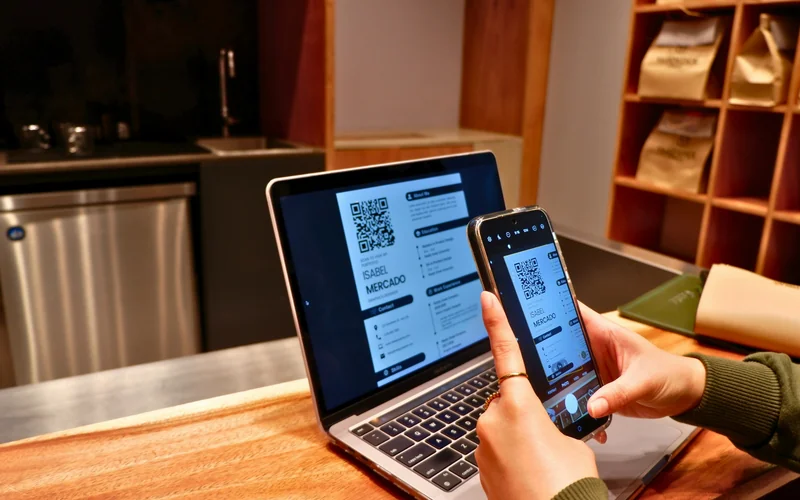
International student completing Malta student visa application online — Outreach Recruitment
Applying for a Malta student residence permit can be done online. Photo: Marielle Ursua / Unsplash.
  1. Valid passport — minimum 6 months validity beyond your study period
  2. Completed application via the Identità e-services portal
  3. Official letter of acceptance from an MFHEA-licensed institution
  4. Proof of financial means — minimum €7,000 per year
  5. Proof of accommodation — rental agreement or student residence confirmation
  6. Comprehensive health insurance for the full study period
  7. Clean criminal record certificate — apostilled, all countries of residence in past 5 years
  8. Academic transcripts and diplomas — apostilled or notarised; translated if not in English
  9. Passport-size photographs (biometric)
  10. Visa and permit fee payment

Processing times: Maltese embassy abroad: 4–8 weeks. Identità in Malta: 3–6 weeks. Apply at least 8 weeks before your course start date.

2026 note: Identità has expanded its e-services portal — biometric appointments can now be booked online.

Start Your Malta Application Today

Start Your Application →
5. Student residence permit in Malta

Non-EU students enrolled in programmes over 90 days must hold a student residence permit from Identità. The permit is tied to your enrolled institution and renewed annually.

  • Submit application via the Identità portal or at a service centre
  • Attend biometric appointment — fingerprints and photograph
  • Permit card valid 12 months; renew before expiry
  • Notify Identità immediately if you change institution
  • Late renewal = unlawful stay status — renew at least 30 days before expiry

Free Study in Malta Webinar

Get expert answers about studying in Malta, visa requirements, and available programmes — live from our Malta team.

Register for the Free Webinar →
6. Cost of studying in Malta in 2026

Malta’s living costs average €750–€1,100/month — significantly below London, Amsterdam, or Dublin. Tuition fees are also among the lowest in the EU for English-taught programmes.

Student planning study budget in Malta with laptop — cost of studying in Malta 2026 | Outreach Recruitment
Planning your study budget in advance helps avoid surprises in Malta. Photo: Nick Morrison / Unsplash.
  • University of Malta undergraduate: €3,000–€7,500/year
  • University of Malta postgraduate: €5,000–€12,000/year
  • MCAST diploma/HND: €2,500–€5,000/year
  • Private college undergraduate: €4,000–€10,000/year
  • English language school: €150–€350/week
  • Accommodation (shared): €350–€600/month
  • Food and groceries: €150–€250/month
  • Student transport pass: €26/month
  • Health insurance: €30–€80/month
Malta vs other EU study destinations — cost comparison 2026
  • Malta: €750–€1,100/month | €3,000–€12,000/year tuition
  • UK (London): €2,000–€2,500/month | €15,000–€38,000/year
  • Netherlands: €1,200–€1,600/month | €8,000–€15,000/year
  • Ireland: €1,400–€1,800/month | €9,000–€25,000/year
  • Germany: €900–€1,300/month | €500–€3,000/year (semester fees)

Malta Study Guide — Everything You Need to Know

Visa steps, university profiles, cost breakdowns, scholarships, and accommodation tips — all in one place.

Read the Full Malta Study Guide →
7. Scholarships for international students in Malta 2026

Several national, EU-level, and institutional scholarship programmes exist specifically for international students in Malta, ranging from full tuition coverage to partial grants.

  • Erasmus+ — EU students on exchange; €200–€800/month
  • Malta Government Scholarship Scheme (MGSS) — full and partial grants; see scholarshipsmalta.gov.mt
  • University of Malta bursaries — 10–30% tuition reduction; merit and needs-based
  • Commonwealth Scholarships — full tuition and stipend; deadline November–December
8. Student accommodation in Malta

Start your accommodation search at least 8–10 weeks before your course. The market moves quickly, especially for September intake.
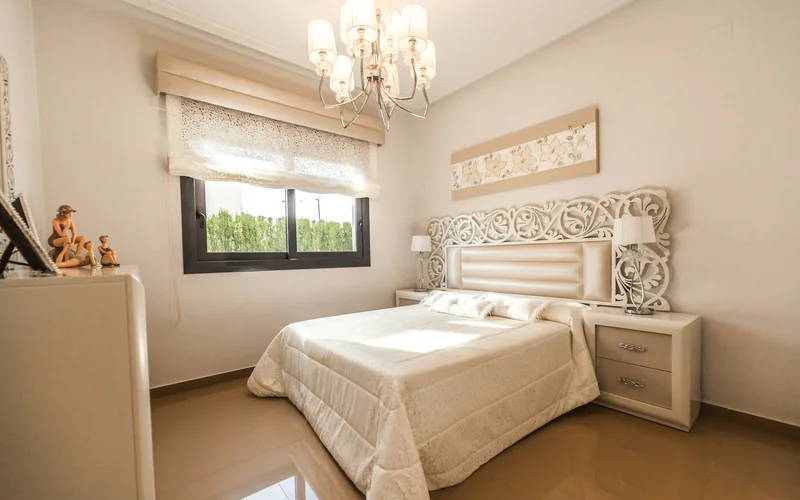
Student accommodation bedroom in Malta — modern furnished room for international students | Outreach Recruitment
Student rooms in Malta range from university residence halls to private shared apartments. Photo: Frames For Your Heart / Unsplash.
  • University Residence (Lija) — En-suite rooms; managed by UM; apply early
  • Shared apartment — Most common; Msida, Gzira, Sliema, St. Julian’s; €350–€600/month
  • Homestay — Room and meals; €500–€850/month; ideal for EFL students
  • Private student villages — Wi-Fi, gym, study spaces; €550–€900/month
9. Working while studying in Malta in 2026

EU students have no work restrictions. Non-EU students on a valid student residence permit may work up to 20 hours per week during term time and full-time during official academic holidays.

International student working part-time in Malta cafe — 20 hours per week allowed | Outreach Recruitment
Non-EU students may work up to 20 hours per week in Malta during term time. Photo: Gustavo Fring / Pexels.
  • EU/EEA students — unlimited right to work
  • Non-EU students — up to 20 hrs/week during term; full-time in official holidays
  • Minimum wage 2026 — €812.08/month (40-hour week)
  • Popular roles — hospitality, call centres, retail, events, ICT support
10. Post-study work opportunities in Malta

Malta’s economy is one of the EU’s fastest-growing, driven by iGaming, fintech, financial services, and ICT. EU graduates can remain and work freely. Non-EU graduates can convert their permit via a job offer through Jobsplus.

  • iGaming and online betting — €28,000–€42,000/year
  • Financial services and fintech — €26,000–€40,000/year
  • ICT and software — €28,000–€50,000/year
  • Tourism and hospitality — €22,000–€32,000/year
11. English language courses in Malta

Malta is a world-leading EFL destination with 30+ EAQUALS/FELTOM-accredited schools. With English as an official language used daily, students experience genuine immersion outside the classroom.

  • General English (A1–C2): €150–€350/week
  • IELTS/Cambridge exam preparation: €600–€900 for 4 weeks
  • Business English, Academic English, intensive summer programmes
12. Student life in Malta

Living in Malta means Mediterranean weather, a compact island, a safe environment, and a rich cultural life — all while studying towards an EU-recognised degree.
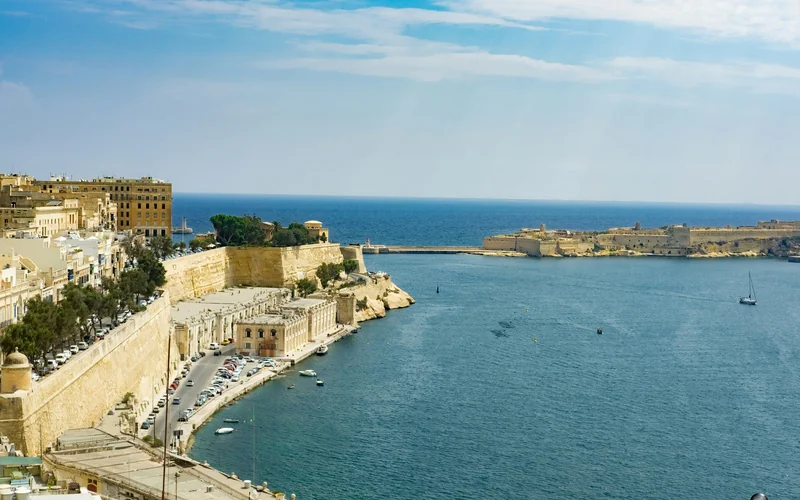
Valletta Malta waterfront buildings — UNESCO World Heritage capital city for international students | Outreach Recruitment
Valletta, Malta's capital — a UNESCO World Heritage city and home to a vibrant student community. Photo: Luke Tanis / Unsplash.
  • Climate — 300+ sunny days/year; swimming season May–November
  • Safety — consistently top 5 safest EU countries
  • Transport — student monthly bus pass €26; island reachable in 30–45 minutes
  • Culture — Valletta is a UNESCO World Heritage City; Gozo (25 min ferry) is a weekend escape
  • Student community — University of Malta has 200+ clubs and societies
★★★★★

"The accommodation support from Outreach Recruitment saved me weeks of searching. I found a shared apartment near campus before I even landed in Malta. The island is safe, friendly, and easy to navigate. I renewed my studies for a second year without hesitation."

, Egypt — St. Martin’s Institute, Finance, 2026

Watch: Guide to Study in Malta 2026 — Video Guide

Video coming soon. Join our free Study in Malta webinar for live guidance.

13. How to apply to study in Malta — step-by-step guide

Applying to study in Malta involves nine steps. Start at least three months before your intended course date to allow sufficient time for visa processing and accommodation.

  1. Choose your institution and programme — Research MFHEA-licensed institutions. View all available programmes on our 2026 listing.
  2. Check entry requirements — IELTS 5.5–6.0 for undergraduate; 6.0–6.5 for postgraduate.
  3. Submit your application — Apply through the institution’s admissions portal or via an authorised representative such as Outreach Recruitment.
  4. Receive your letter of acceptance (LOA) — Confirms programme, start date, and tuition. Cornerstone document for your visa.
  5. Apply for your visa and residence permit — Apply at least 8 weeks before your course date.
  6. Arrange accommodation — Book before arriving. Start searching 10 weeks out for September intake.
  7. Arrive and complete enrolment — Complete institutional enrolment and register your address with Identità.
  8. Attend biometric appointment — Book via the Identità e-services portal.
  9. Collect your residence permit card — Collect from Identità and begin your studies.
14. Common mistakes international students make
  1. Enrolling at an unlicensed institution — No MFHEA licence = no permit. Verify at mfhea.mt first.
  2. Applying for the visa too late — Processing takes 4–8 weeks minimum.
  3. Underestimating upfront costs — Budget for deposit, first month’s rent, insurance, and 4 weeks of living expenses before any income arrives.
  4. Working above permit hours — Exceeding 20 hrs/week as a non-EU student can invalidate your permit.
  5. Missing renewal deadlines — Renew at least 30 days before expiry.
  6. Assuming all English courses qualify — Courses under 15 hrs/week may not meet permit eligibility.
  7. Not using a qualified advisor — An authorised advisor reduces errors and delays significantly.
15. Malta vs other study destinations — honest comparison
  • Malta vs UK — Malta is significantly cheaper. UK degrees carry stronger brand recognition outside the EU.
  • Malta vs Germany — Germany has near-free tuition but most programmes require German. Malta teaches entirely in English.
  • Malta vs Netherlands — Similar English-language offering but Dutch living costs are 40–60% higher.
  • Malta vs Cyprus — Both are small EU English-speaking islands. Malta has a more established EFL industry and more diverse economy.
Frequently Asked Questions
Can international students study in Malta?

Yes. Malta welcomes international students from EU and non-EU countries. Non-EU students need a Type D student visa and a residence permit from Identità. All accredited programmes are taught in English and degrees are recognised across all 27 EU member states.

How much does it cost to study in Malta in 2026?

University of Malta tuition ranges from €3,000 to €7,500/year for undergraduates and €5,000 to €12,000/year for postgraduates. Private colleges charge €4,000 to €10,000/year. Monthly living costs average €750 to €1,100, covering accommodation, food, transport, and insurance.

What documents are needed for the Malta student visa?

You need: a valid passport, letter of acceptance from an MFHEA-licensed institution, proof of financial means (€7,000+/year), proof of accommodation, comprehensive health insurance, an apostilled criminal record certificate, and academic transcripts. Processing takes 4–8 weeks.

Can I work while studying in Malta?

EU students have no work restrictions. Non-EU students on a valid student residence permit may work up to 20 hours per week during term time and full-time during official academic holidays. Employers must notify Jobsplus. Minimum wage in 2026 is €812.08/month.

Are Maltese degrees recognised internationally?

Yes. Malta follows the Bologna Process and the Maltese Qualifications Framework maps directly to the European Qualifications Framework. University of Malta degrees are recognised across all 27 EU member states and widely accepted by employers globally.

What scholarships are available in Malta?

Key scholarships: Erasmus+ (€200–€800/month for EU students), the Malta Government Scholarship Scheme, University of Malta bursaries (10–30% tuition reduction), and Commonwealth Scholarships. Deadlines fall between November and March annually.

Is Malta in the Schengen Area?

Yes. Malta joined the Schengen Area in 2007. A student residence permit allows travel within the Schengen zone for short stays — up to 90 days in any 180-day period in other Schengen countries — while you are enrolled in Malta.

Key takeaways
  • Malta is a full EU member state — degrees recognised across all 27 EU countries
  • English is an official language — no language barrier
  • Non-EU students need a Type D visa and residence permit from Identità
  • Tuition: €3,000–€12,000/year; living costs: €750–€1,100/month
  • Non-EU students can work up to 20 hrs/week during term time
  • Malta is in the Schengen Area — your permit enables free Schengen travel
  • Always verify MFHEA licensing before enrolling
  • Apply at least 8 weeks before your course start date
Conclusion

Malta in 2026 offers a fully EU-recognised degree, English as an official language, Mediterranean quality of life, affordable costs, and an active post-graduation job market. Few places in Europe offer this combination simultaneously.

For everything you need on programmes, costs, and the application process, read our complete guide to studying in Malta and browse all available programmes for the 2026 intake.

Apply to Study in Malta — 2026 Intake Now Open

Apply to Study in Malta →

Free Study in Malta Webinar

Still have questions? Join our free Study in Malta webinar — live Q&A with Malta education specialists.

Join Our Free Study in Malta Webinar →

للطلاب الناطقين بالعربية

تُعدّ مالطا واحدةً من أبرز وجهات الدراسة في أوروبا للطلاب الدوليين. توفر الجزيرة برامج دراسية معتمدة من الاتحاد الأوروبي وتُدرَّس بالكامل باللغة الإنجليزية، بتكاليف معيشية أقل بكثير مقارنةً بالدول الأوروبية الأخرى. للاستفسار والتقديم، تواصل مع فريق Outreach Recruitment.

Pour les étudiants francophones

Malte est l’une des destinations d’études les plus accessibles d’Europe : des diplômes reconnus par l’UE, des cours entièrement en anglais, et un coût de la vie nettement inférieur à la France, la Belgique ou le Canada. Les étudiants non-UE obtiennent un visa étudiant type D et un permis de résidence via Identità. Pour démarrer votre dossier de candidature, contactez l’équipe d’Outreach Recruitment.

Internal links
Sources and external references

Cite this article

APA:
Outreach Recruitment Agency. (2026). Guide to Study in Malta 2026: Complete Guide for International Students. Outreach Recruitment. Retrieved from https://outreachrecruitment.net/study-in-malta-complete-guide/

MLA:
Outreach Recruitment Agency. “Guide to Study in Malta 2026: Complete Guide for International Students.” Outreach Recruitment, 11 Jun. 2026, outreachrecruitment.net/study-in-malta-complete-guide/.

Chicago:
Outreach Recruitment Agency. “Guide to Study in Malta 2026: Complete Guide for International Students.” Outreach Recruitment. June 11, 2026. https://outreachrecruitment.net/study-in-malta-complete-guide/.

← Back to Malta Study Guide

Read more

Read article
Malta student visa complete guide
Visa Guide

Malta Student Visa Complete Guide 2026

Read article
Cost of living in Malta as a student
Student Life

Cost of Living in Malta as a Student 2026

Read article
How to apply to study in Malta step by step guide
Application Guide

How to Apply to Study in Malta: A Step-by-Step Guide

For teams preparing for growth, not hype

Help
Buy