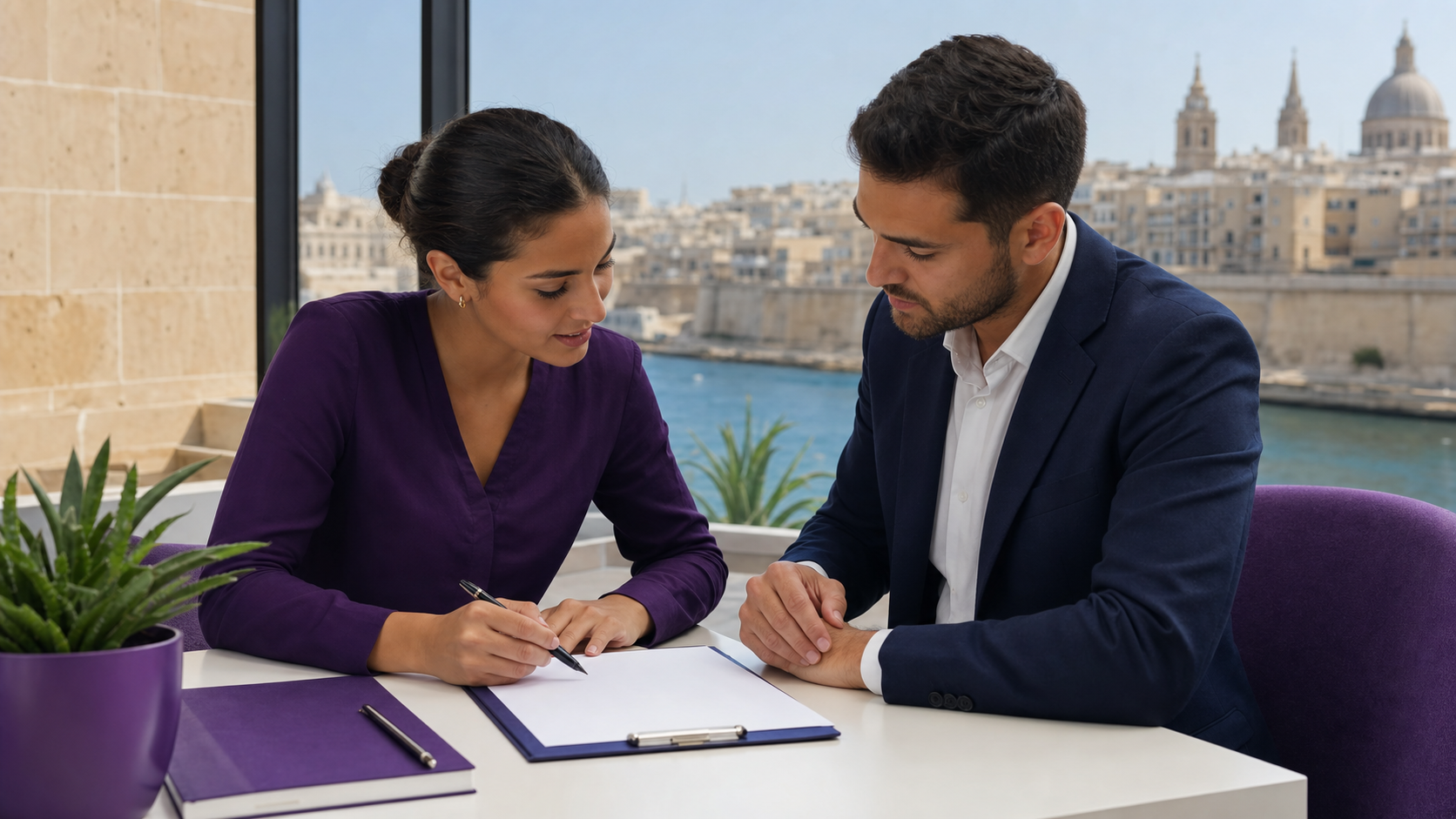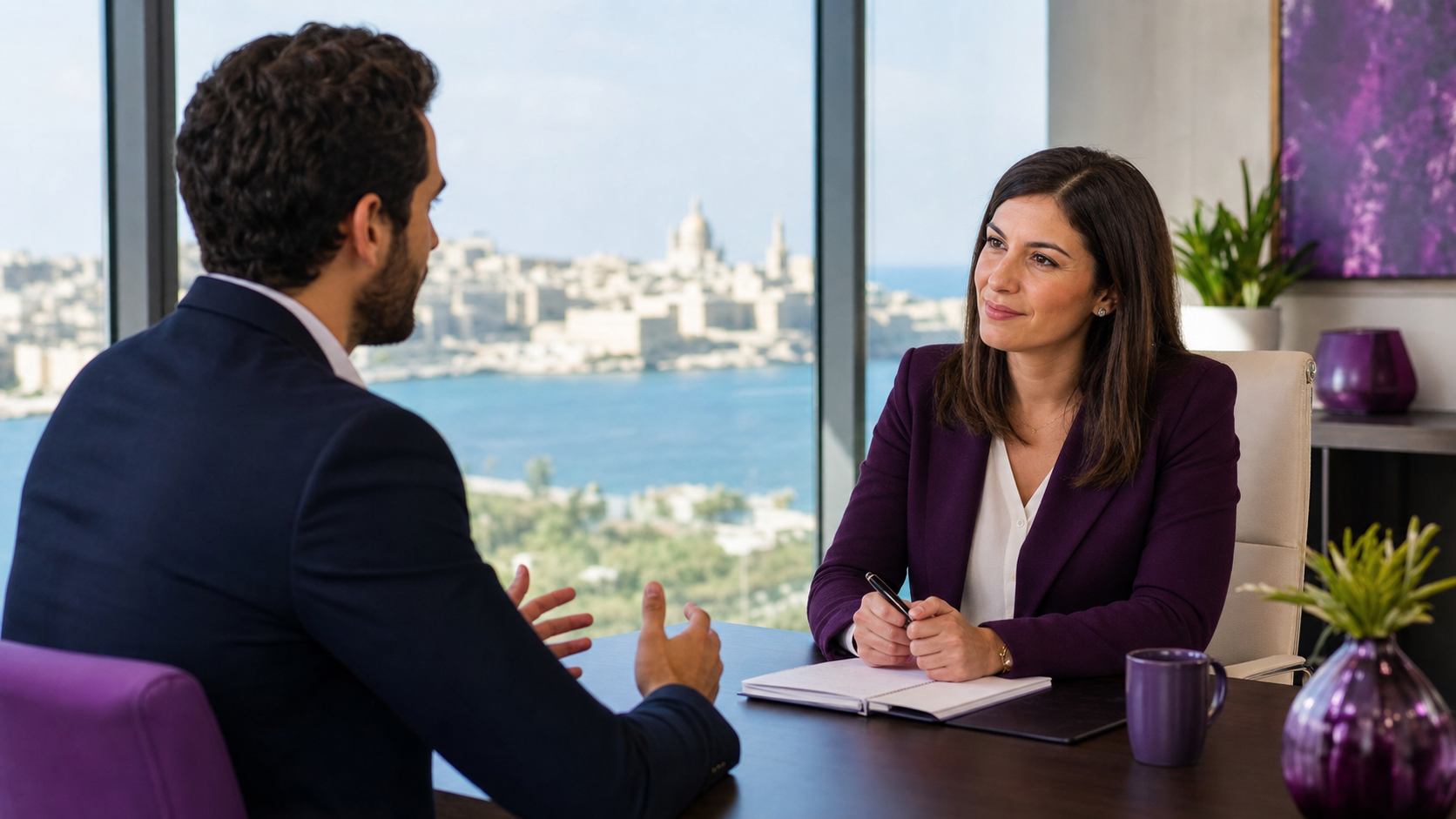
Most interviews in Malta follow a predictable pattern — once you know what's actually being asked underneath the question, preparing a confident answer takes minutes, not hours.
Whether you're interviewing for a hospitality role in St Julian's, an admin position in Sliema, or a finance role in Valletta, employers in Malta tend to ask a similar core set of questions. They're not trying to catch you out — they're checking whether you understand the role, whether you're reliable, and whether you'll fit the team. Here's how to answer the questions that come up most often.
Key Takeaways
- Keep your "tell me about yourself" answer to 60-90 seconds and job-relevant
- Match your experience to the specific job description, not your whole career history
- Give a realistic salary range rather than a single fixed number
- Always prepare at least one question to ask the interviewer
- Bring a printed CV, photo ID, and any certificates relevant to the role
"Tell Me About Yourself"
This is almost always the opening question, and it trips up more candidates than any other. Keep your answer to 60-90 seconds: a brief summary of your work background, one or two relevant achievements, and why you're applying for this specific role. Avoid a full life story — the recruiter wants a professional snapshot, not a biography.
"Why Do You Want to Work Here?"
Generic answers like "I need a job" rarely land well. Instead, mention something specific — the type of work, the team size, the location, or the opportunity to build a particular skill. If Outreach Recruitment placed you for the interview, it's fine to say you were drawn to the role because it matched what you were looking for in Malta's job market.
"What Relevant Experience Do You Have?"
Match your answer to the job description rather than listing your entire CV. For hospitality roles, lead with guest-facing experience and how you handle busy shifts. For admin, finance, or IT roles, lead with the specific systems, processes, or qualifications the role calls for.
"What Are Your Salary Expectations?"
Give a realistic range based on the role and your experience level, rather than a single fixed number, and mention that you're open to discussing the full package. If you're not sure what's typical for the role, it's reasonable to ask your recruiter for guidance before the interview.
"Do You Have Any Questions for Us?"
Always have at least one question ready. Asking about training, shift patterns, team structure, or what success looks like in the first three months shows genuine interest and helps you judge whether the role is right for you too.
How to Prepare in the Days Before
- Re-read the job description and match your experience to each requirement
- Prepare one or two specific examples that show how you've handled a real work situation
- Confirm the interview format — in person, phone, or video — and the exact time and location
- Bring a printed CV, a form of ID, and any certificates relevant to the role
- Plan your journey in advance, especially for interviews in areas with limited parking such as Valletta or Sliema
After the Interview
Once your interview through Outreach Recruitment is complete, our team follows up with the employer on your behalf and lets you know the outcome. You don't need to chase the employer directly — if you're shortlisted, we'll be in touch to arrange next steps.
Ready to Put This Into Practice?
Browse open jobs in Malta to find a role that matches your experience, or send your CV to hr@outreachrecruitment.net and our team will match you with suitable openings and prepare you ahead of the interview.
Frequently Asked Questions
What are the most common interview questions asked in Malta?
Employers in Malta typically ask about your background and motivation, why you want the role, your relevant experience, your availability, and your salary expectations. Hospitality and customer-facing roles also focus heavily on language skills and how you handle difficult customers. For contact centre interviews, see our call centre interview questions with sample answers and the latest customer service vacancies in Malta.
How should I answer "Tell me about yourself" in a Maltese job interview?
Keep it short and job-relevant: a brief summary of your work background, one or two achievements, and why you're applying for this specific role in Malta. Avoid a full life history — recruiters want a 60-90 second professional summary, not a biography.
Do I need to prepare differently for hospitality interviews in Malta?
Yes. Hospitality interviews in Malta focus more on guest-facing scenarios, flexibility with shifts, and language ability than on formal qualifications. Be ready to describe how you've handled a difficult guest or a busy shift.
What should I say about salary expectations in a Malta job interview?
Give a realistic range based on the role and your experience rather than a single fixed figure, and mention that you're open to discussing the full package. If you're unsure of typical rates for the role, it's fine to ask the recruiter for guidance before the interview.
How long do interviews in Malta usually take?
Most first-round interviews in Malta last between 20 and 45 minutes. Roles with multiple stages, such as finance or IT positions, may involve a longer second interview or a short practical task.
Is it normal to have more than one interview round in Malta?
It depends on the role. Hospitality, retail, and admin roles are often filled after a single interview. Finance, IT, and management roles more commonly involve a second interview with a senior manager or department head.
What should I bring to a job interview in Malta?
Bring a printed copy of your CV, a form of photo ID, and any relevant certificates or references. If the role requires specific documentation, such as a work permit for non-EU candidates, confirm with the recruiter beforehand what to bring.